Commercial, institutional film, branded content. Three formats that can all run ninety seconds on screen, be shot by a similar crew, and end up costing anywhere between CHF 8’000 and CHF 500’000 (sometimes more) depending on which one was briefed. They are not interchangeable. Each one targets a different audience, runs on a different channel, and fails in a different way when it’s mismatched to the goal.
Most production mistakes happen before a frame is shot, when a brand asks for “a video” without naming the format. By the end of this article, you’ll have a working definition of the three, a side-by-side comparison, and a decision framework for picking the right one for your next campaign.
In this article

What Is a Commercial?
A commercial is a short-form advertising piece built to sell a product, a service, or a brand idea. It runs anywhere from fifteen seconds to two minutes, designed for paid distribution: TV, cinema, pre-roll on YouTube, paid social. The goal is clear: an advertiser pays to put the film in front of an audience that didn’t ask to see it, and the film has to earn attention fast. Within this format, the strongest current is narrative-driven advertising, where character, tension, and emotion carry the brand message rather than product shots and voiceover. Switzerland Tourism’s Falling for Autumn, starring Roger Federer and Mads Mikkelsen, is a working example: the product (Switzerland in autumn) arrived inside a story about a film crew waiting for a missing actor, and the film won Grand Prix at JWTFF.

Commercials don’t always offer the option to measure their impact precisely: a tourism campaign like Falling for Autumn lives across cinema, broadcast, and digital, where the link between viewing and an actual booking is hard to attribute. Where measurement is possible, the format performs. Denner, in 2022, ran a campaign called Dogs, produced by Thjnk Zurich. Markt-Kom reported that the campaign lifted customer frequency by 3.8% against retail budgets many times larger from Migros and Coop.
Production budgets for commercials in Switzerland typically start around CHF 40’000 for a one-day shoot with a small cast. A national campaign with multiple shoot days, named talent, and full art direction sits comfortably in the CHF 200’000 to 400’000 range. High-end tourism, automotive, watchmaking, and luxury campaigns regularly run well above CHF 500’000 for production alone, and the most ambitious cross into seven figures before media spend is added.
What drives those numbers, from crew rates to actor buyouts, is explained line by line in our guide here.
Wyzowl’s State of Video Marketing 2026 reports that 82% of marketers say video gives them a good ROI, and 71% believe the effective sweet spot sits between thirty seconds and two minutes, which is exactly where most of this work lives.
What Is an Institutional Film?
An institutional film, also called a institutional video and corporate video, is built to communicate information rather than sell a product. The audience is known and reachable: existing clients, employees, investors, partners. It usually runs on the channels of the brand: company website, intranet, sales decks, trade shows, YouTube, LinkedIn. Common formats include the founder interview, the company portrait, the process explainer, the recruitment video, and the trade-show loop. In most cases, crews are smaller and shoots fit inside one or two days, with post-production that stays straightforward. Budgets in Switzerland may start around CHF 5’000 for a single-day interview setup and reach CHF 25’000 for multi-location work. They can climb significantly higher when the project requires a larger crew, more specific shots, or a more polished and high-end finish.
A good benchmark is Indeed’s Top Tips series on YouTube, where each episode is shot in real interview situations with proper casting, set construction, and motion-design overlays. Episodes like that easily land in the CHF 80’000 to 250’000 range per shoot block. Production efficiency comes from concentrating multiple episodes into one shoot period: a two-day shoot covering several deliverables is significantly cheaper in pre-production and post than two separate one-day shoots scheduled months apart, because the brief, casting, set, lighting, and edit infrastructure are paid for once rather than twice.
Institutional video runs into trouble when it’s asked to do the work of a commercial without being designed for it. A founder interview repurposed as a thirty-second pre-roll, with no thought given to a hook in the first three seconds, will underperform an advert built for that channel. A well-conceived institutional film with a strong opening can absolutely cross into paid social, but it has to be planned that way from the brief, not extracted from existing footage in the edit.
What Is Branded Content?
Branded content sits between the commercial and the institutional film, and it follows a different rule from both. The audience chooses to watch it. There’s no paid push forcing it into someone’s feed. The film appeals to audiences because it gives them exactly what they’re looking for: entertainment, beauty, information, access to a world they’re curious about. According to the Content Marketing Institute, branded content gets audiences to engage with a brand through entertainment or educational value, rather than through direct product pitch.
Baloise Group’s The Bank Job, produced by Shining Nice, won Gold Edi in the Branded Content category in 2025 by casting familiar faces from the SRF series Tschugger into a short film that plays like a heist comedy and functions as corporate communication.
The film commits to being entertainment first. No product pitch, no testimonial, no overlaid value proposition at the thirty-second mark. A bank gets to make audiences laugh, and a Swiss comedy cast carries the brand without having to explain it. The financial sector instinct is to reassure, which is why most bank films land somewhere between forgettable and patronising. The Bank Job takes the opposite approach and trusts the genre.
Budgets for branded content in Switzerland typically fall between CHF 15’000 and CHF 80’000, with flagship pieces going higher. Distribution is usually a mix of owned channels, organic social, partnerships, and sometimes paid amplification once the film proves it earns engagement. The broader Swiss branded content and influencer segment now generates up to CHF 100 million in annual revenue, a scale that reflects how much brand budget has moved from interruption advertising toward content audiences choose to engage with.
Format-by-Format Comparison
Here’s the spine of the decision, side by side.
| Axis | Commercial | Institutional Film | Branded Content |
|---|---|---|---|
| Primary objective | Sell a product or brand idea | Inform a known audience | Build affinity and earn attention |
| Audience | Cold, mass-market | Warm, internal or B2B | Self-selecting |
| Tone | Cinematic, emotive | Clear, factual | Editorial, story-led |
| Typical duration | 15s to 2 min | 1 to 5 min | 90s to 5 min |
| Distribution | Paid media | Owned channels | Organic + owned |
| Budget range (CH) | CHF 40’000 to 500’000+ | CHF 5’000 to 25’000 | CHF 15’000 to 80’000+ |
| Crew size | 10 to 30+ | 2 to 5 | 5 to 15 |
Reading the table sideways: a corporate video and an advert aren’t competing options at different price points. They serve different briefs. A founder interview at CHF 12’000 and a narrative commercial at CHF 65’000 aren’t the cheap version and the expensive version of the same thing. They’re two different deliverables. The cost difference reflects the team and the time the project takes, not the length of the final cut.
Which Format Does Your Brand Actually Need?
The format question gets easier when you start from the business objective rather than the deliverable.
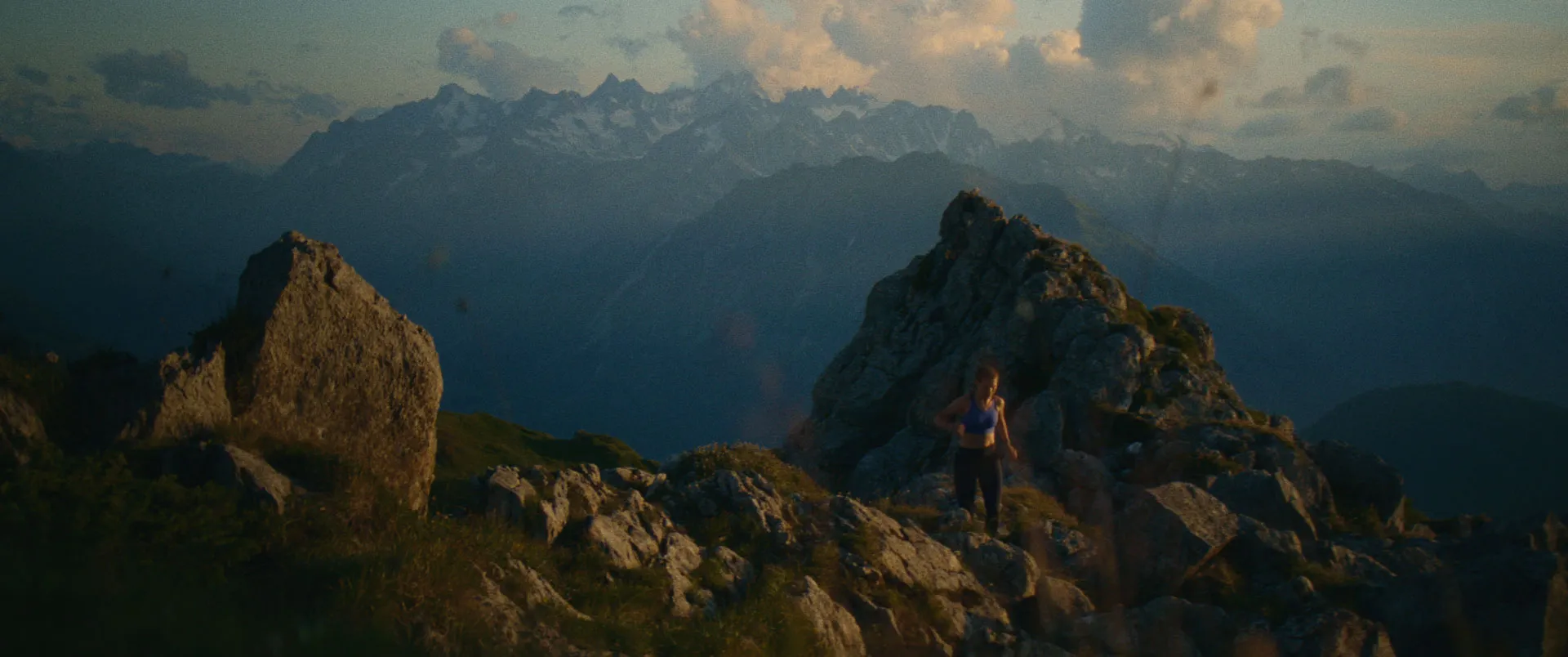
Scenario 1: Verbier in summer
- Situation: The destination is mainly known internationally for winter. The Head of Marketing at the regional tourism office wants to attract more international visitors during the summer season, when alpine pastures, hiking, and cultural events are at their strongest.
- Suggested format: A narrative commercial, sixty to ninety seconds, built around a single emotional truth about Verbier in summer. Shorter cutdowns at thirty and fifteen seconds for digital.
- Possible running platforms: Cinema, national and international TV in target markets, paid pre-roll on YouTube, paid social on Instagram and TikTok, owned channels.
- Estimated production budget: CHF 80’000 to 250’000, separate from media spend.
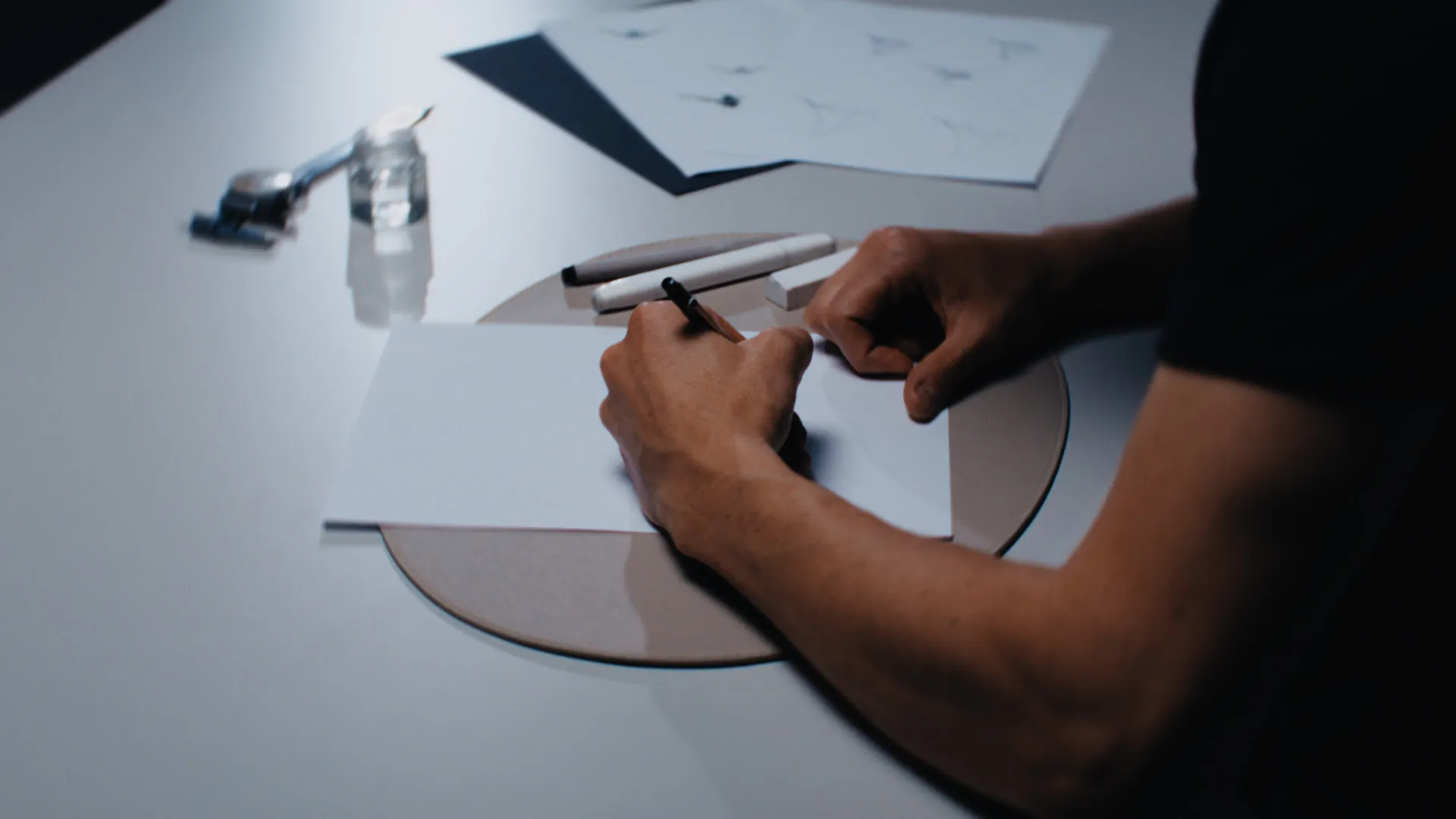
Scenario 2: An independent Swiss watchmaker launching a new collection
- Situation: The Brand Manager needs to land an emotional position around heritage, craft, and rarity rather than push specifications. The collection launch needs both moving image and a strong stills package for the brand site, retail materials, and press kits.
- Suggested format: A branded content piece, three to six minutes, following the master watchmaker through a single piece from raw materials to final regulation. Stills shot during the same production day for use across the brand site, social, and partner press.
- Possible running platforms: The brand site as the hero asset, the brand’s YouTube channel, specialised watch media (Hodinkee, Monochrome, WatchTime), partner press, organic social.
- Estimated production budget: CHF 20’000 to 60’000 for the film and stills package combined.
Scenario 3: A B2B SaaS company onboarding existing customers to a new product feature
- Situation: The Head of Marketing knows the audience, knows the product, knows the gap. The goal is comprehension and adoption, not awareness.
- Suggested format: An institutional film, two to three minutes, demonstrating the feature with a customer voice over real screen recording.
- Possible running platforms: The customer success email, the in-app help centre, the support site, onboarding decks, the sales team’s outbound sequence.
- Estimated production budget: CHF 8’000 to 20’000.
Scenario 4: A Swiss biopharmaceutical company reinforcing its position with research and clinical partners
- Situation: A company developing treatments for rare diseases wants to reinforce its positioning with research partners, hospitals, and the broader scientific community. The brief is institutional in intent (no product, no sale), but the execution needs to land emotionally and visually at the level of a major brand campaign. The company has its own internal marketing team that handles strategy.
- Suggested format: A branded content piece, two to four minutes, telling the story of a patient journey woven through the work of the researchers, with cinematic production values, casting, and an emotional voiceover. The film functions as a manifesto for what the company stands for, not as advertising.
- Possible running platforms: The company website, partner-facing presentations, scientific congresses and trade events, LinkedIn, internal communication, recruitment materials.
- Estimated production budget: CHF 160’000 to 215’000.
This is also where the most common confusion sits: when should you opt for branded content rather than a traditional advert? The answer depends on whether the audience is already paying attention. If you’re paying for reach into a cold audience that has no reason to care about you yet, an advert is the more efficient tool. If you’re trying to build affinity over time with an audience that might choose to follow you, branded content does the work that paid advertising can’t.
A note on the budgets above. Every production is different. Format, scope, platform, casting, location, and post-production complexity all move the numbers. The ranges shown here are illustrative, anchored to the type of brief described in each scenario. In practice, a production company works within the client’s budget and requirements, scoping the format to what the project actually needs rather than to a fixed price tag.
Can You Combine These Formats?
Yes, and most strong brand strategies are built that way. The three formats map onto the marketing funnel rather than competing inside it.
At the top of the funnel, a branded content film opens the conversation: wide reach, cold audience, the brand earning its first moment of attention by giving viewers something they actually want to watch. In the middle, commercials retarget the audience that engaged with the branded piece. Shorter cutdowns, a narrower message, a sharper push toward consideration. At the bottom, institutional video carries the qualified prospect across the line: deeper content for someone who already knows the brand, is close to a decision, and needs information, proof, or reassurance before they commit. The same audience moves through all three stages. The films are designed for the stage they sit in, not against each other.

Here is what this looks like in practice. A Swiss watchmaker needs a twelve-minute branded content portrait of one of its watchmakers, a thirty-second commercial cutdown for paid pre-roll around a launch, and three short institutional films for retail staff training. Planned at treatment stage, the three deliverables are scoped into a single two-day shoot: dedicated setups for each format, a schedule built around the cast and location requirements of all three briefs, and an edit plan that splits the material into its three destinations from the start. Planned after delivery, the same scope becomes three separate shoots and three separate budgets. The director and the producer make that call together, months before anyone steps on set.
At global scale, Apple applies the same discipline to its Underdogs series for Apple at Work, where a single production logic (director Mark Molloy, recurring cast, composer Hauschka) has been kept consistent across six long-form comedy films, functioning at once as YouTube branded content and as Apple’s primary B2B communication for IT buyers. Different scale, same rule.
The key to combining formats is to plan the combination at the treatment stage, not in the edit. If the cutdowns and the supporting institutional pieces are designed into the shoot day, the rental cost doesn’t move and the additional formats land naturally. If they come up after delivery, you’re usually looking at a reshoot.
This is also where the branded-and-corporate question resolves itself: institutional film and branded content aren’t either/or choices. A B2B company can publish both: an institutional film explaining what the product does, and a branded content series profiling the customers who use it. They share an audience, they reinforce each other, and they answer different questions a buyer asks at different stages.
Frequently Asked Questions About Commercials, Institutional Video, and Branded Content
What is the difference between a commercial and a corporate video?
A commercial is built to sell to a cold audience through paid distribution. A corporate video is built to inform a warm audience through owned channels. The two formats use different crew structures, follow different production logic, and sit at different price points. A founder interview shot in one day with a small crew is a corporate video. A scripted ninety-second campaign film with cast, locations, and an art department is a commercial.
When should you opt for branded content rather than a traditional advert?
Choose branded content when the audience needs a reason to care about the brand before they can be sold to, and when the brand has the patience to build affinity over time rather than convert in a single exposure. Choose a traditional advert when you’re paying for reach into a cold audience that won’t return for a second view, and the film has to do its job in fifteen to ninety seconds.
Can corporate films and branded content be combined?
Yes. The most efficient combination follows the marketing funnel: branded content opens the conversation with a cold audience, commercials retarget the audience that engaged, and institutional video supports the qualified prospect close to a decision. Production-side, the most efficient setup is to scope the formats together at treatment stage, so a single shoot block can yield material for branded content, paid cutdowns, and institutional deliverables. Combining formats post-delivery usually means a reshoot.
How long should a commercial be for social media versus TV?
For paid social and pre-roll, fifteen to thirty seconds is the working range, with the brand idea landing in the first three seconds. For TV and cinema, sixty to ninety seconds gives the story room to breathe. Wyzowl’s 2026 data places the broader effective sweet spot for video at thirty seconds to two minutes across formats. Most campaigns now plan multiple cutdowns from the same master film at the treatment stage, rather than producing them as an afterthought.
What’s the typical budget range for an institutional video in Switzerland?
A standard institutional video sits between CHF 5’000 and CHF 25’000. The lower end covers a single-day interview shoot with a small crew, one location, and a straightforward edit. The upper end covers multi-location work, more complex post-production, and multiple deliverables. Budgets climb significantly higher when the project requires a larger crew, more specific shots, or a more polished, high-end finish. A polished institutional series like Indeed’s Top Tips easily lands in the CHF 80’000 to 250’000 range per shoot block.
Does branded content need a call-to-action?
Not in the way an advert does. The strongest branded content earns a follow, a share, or a search rather than a click. A clear CTA at the end of a five-minute brand film often breaks the tone the film just spent five minutes building. The exception is when branded content is plugged into a defined funnel, in which case a soft CTA in the description or end card serves better than one inside the film itself.
The Format Conversation Comes Before the Brief
The cheapest mistake in commercial production is choosing the wrong format and discovering it after delivery. The expensive version of that mistake is choosing the right format but briefing it as the wrong one, ending up with a corporate video at commercial pricing or an advert at corporate scope. Before you write the brief, name the format. Before you name the format, name what the film needs to change about how the audience thinks, feels, or acts. Everything downstream gets cheaper and clearer once that decision is made.
Once the format is clear, the next decision is who makes it. Our guide to choosing a film production company in Switzerland covers what to look for and what to ask before signing.
Talk to us about your next film
If you’re not sure which of the three formats your brand actually needs, book a call
Discuss your project with Samuel or email samuel@focusline.ch. We’ll help you map your brief to the right format before anyone talks budget, crew, or deliverables.
Focusline Production is a narrative commercial production company based in Valais, Switzerland. We produce narrative commercials and branded content for brands that want their advertising to hold attention. See our recent work or learn more about our production services.