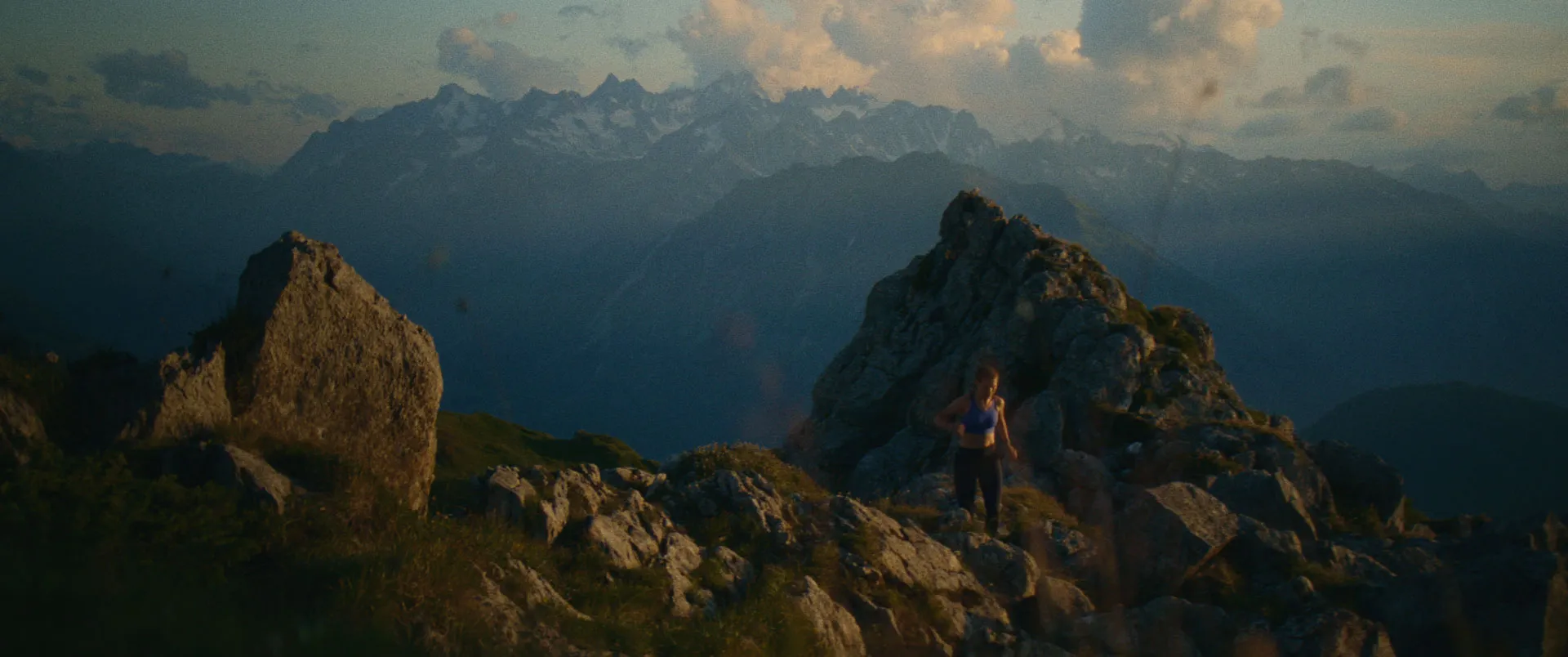
A commercial film looks like a single object on screen. Behind it sits a chain of handovers between five to eight different companies, each with its own role and its own invoice. Marketing directors commissioning their first film often discover that chain only when something inside it breaks: a missing music clearance, a buyout that wasn’t budgeted, a treatment that arrived two weeks late.
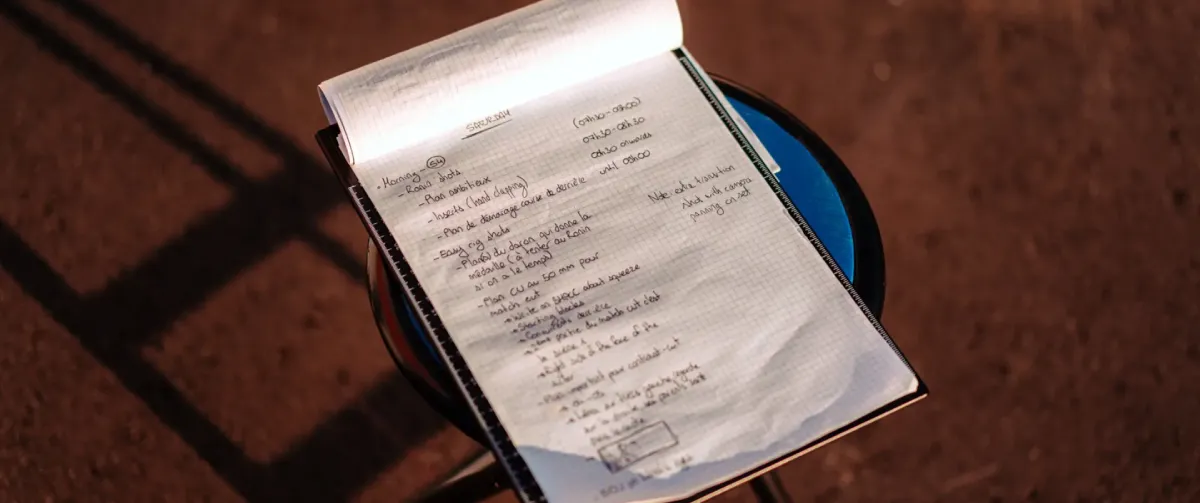
The process is not improvised. It follows a structure formalised over decades by industry bodies in Switzerland (the Swissfilm Association), the UK (the Advertising Producers Association), the US (the Association of Independent Commercial Producers), and Germany (the Produzentenallianz). The same ten stages run on every job, from a CHF 8’000 social video to a CHF 600’000 national TV campaign. This article walks through them, looks at the two competitive processes that decide who gets the work, and explains how Switzerland’s mandatory public-procurement system changes the picture for state-owned clients.
In this article
The ecosystem: who actually makes a commercial film
Commercial film production splits across four layers. Most briefing-stage confusion is confusion about which layer does what.
On the demand side, a brand client owns the marketing need and signs the cheque. Some brands run in-house studios for high-velocity social content. Most rely on external partners for anything with production value. Public-sector buyers (federal offices, cantons, and state-owned enterprises like SBB, Swiss Post, and Swisscom) sit in this layer too, with one important difference: they are bound by procurement law, which adds a tendering stage on top of everything else.
The strategic and creative layer is where the advertising agency works. A full-service creative agency handles strategy, concept, script, storyboard, and production supervision. Independent agencies do the same at a smaller scale. Media agencies plan and buy the airtime. None of these companies actually shoot the film.
The production layer is where the film gets made. The production company bids for the work, hires the director, runs pre-production, leads the shoot, and supervises post-production. Day-rate freelancers fill out the crew list. Post-production houses handle the edit, colour grading, and sound mix. Equipment rental houses provide cameras, lenses, and lighting.
The infrastructure layer covers rights, permits, and distribution: SUISA for music authors, Swissperform for performers, Suissimage for audiovisual authors, the regional film commissions for permits and scouting, and the sales houses that sell airtime to media agencies.

The single most useful insight for a first-time client: the producer of a commercial film is rarely the brand or the agency. It is a separate company, hired through a competitive process, with its own contracts and its own margin. Every party in the chain has a distinct economic interest in the same footage, which is why the contracts and the rights frameworks exist in the first place.
The ten stages of a commercial film production
Every film production company in Switzerland, regardless of budget or format, moves through the same ten stages. The duration of each stage shifts with scope. The sequence does not.

Stage 1: Internal brief
The work starts inside the brand. A marketing director identifies a need, defines audience and message, gets internal sign-off, and sets a budget envelope. Production cost typically lands at 10 to 20% of total campaign cost, with the rest going to media. Below 10% suggests a performance-led setup. Above 20% suggests a craft-led TV Commercial (TVC) push.

Private-sector briefs take 2 to 8 weeks to consolidate. Public-sector briefs take 4 to 12 weeks because internal sign-off has to clear procurement, legal, and budget commitment before the project can be published. The most common pitfall at this stage is confusing what to say with how to say it.
Stage 2: Agency selection
Brands without an existing agency-of-record run a pitch. The standard sequence is a Request for Information (RFI) to check credentials, a chemistry meeting for cultural fit, a Request for Proposal (RFP) asking for a strategic and creative response to a written brief, and a final pitch with two to four shortlisted agencies. A competitive pitch takes 6 to 16 weeks. A full agency-of-record review takes 12 weeks or more.
In Switzerland, the Leading Swiss Agencies (LSA) pitch standards govern this process. Pitch fees should be paid to non-winning shortlisted agencies (typically CHF 5’000 to CHF 25’000). Intellectual property in pitch work belongs to the agency unless explicitly purchased. In 2015, SBB ran a pitch that drew public criticism from agencies asked to work without compensation for a state-owned client. The episode led the LSA and SBB to formalise a joint pitch process now widely referenced for Swiss public mandates.
Stage 3: Creative development
Once an agency is engaged, strategy and creative teams develop the campaign idea, propose two or three concept routes, and lock the chosen direction with the brand. Deliverables move from strategic platform, to concept deck, to approved script per execution, to storyboard or animatic, to a production approach paper that defines rough budget, timing, and channels. This stage takes 3 to 10 weeks.
For Swiss campaigns, three-language adaptability (German, French, Italian) is a creative constraint built in from the start. Successful national work like Migros, SBB, Helvetia, and Pro Infirmis tends to be visually-led precisely because the concept has to work across three regional markets with three different voiceovers.
Stage 4: Production company sourcing
This is where the film production company enters the picture. The agency producer drives the process: defines the production brief (script, storyboard, deliverables, schedule, usage rights, exclusions), selects two or three production companies whose directors fit the project, and runs a competitive bid known in the industry as the triple bid.
The triple bid works like this: the same brief goes to three production companies. Each company picks a director, writes a treatment (the director’s written and visual interpretation of the script, typically 20 to 60 pages), and submits a detailed budget. The agency reads all three treatments, holds a call with each director, and recommends one to the client.
This stage takes 2 to 4 weeks for standard jobs. Express jobs compress to 5 working days. Below CHF 80’000, the admin overhead of a full triple bid often costs more than it saves, and single-bid or two-bid awards are increasingly accepted.
Stage 5: Treatment, bidding, and award
The treatment is the creative contract. It commits the director to a vision and lets the agency and the brand evaluate craft before signing. Treatment writing typically takes 5 to 10 working days, sometimes compressed to 48 to 72 hours for urgent work.
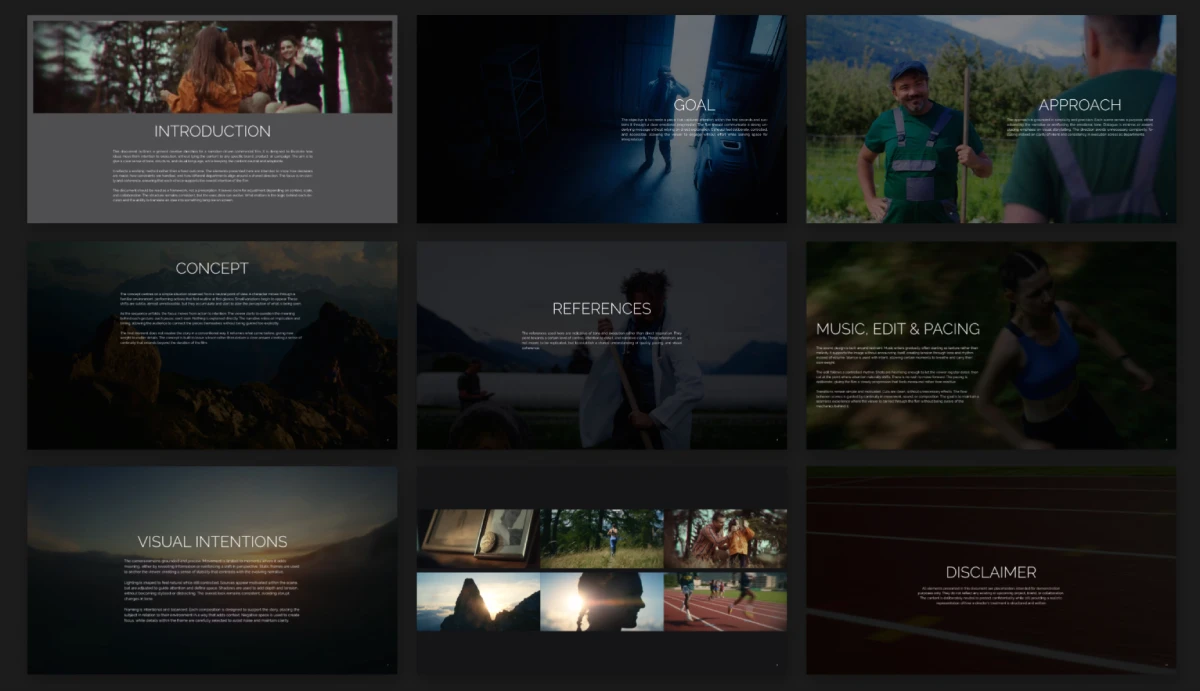
The budget structure follows international standards. Production fees in Switzerland sit in the 15 to 25% band on direct costs (covering overhead, Executive Producer (EP) time, sales, treatment writing, admin). Director creative fees follow the 7 to 10% rule on jobs below roughly CHF 680’000, scaling down for bigger budgets. In practice, that means a CHF 100’000 production carries a director fee of CHF 7’000 to CHF 10’000, and a CHF 300’000 production carries CHF 21’000 to CHF 30’000. Insurance adds around 3% on production costs. The award letter signs the production company onto the project, and the bid becomes the working budget for everything that follows.
Stage 6: Pre-production
Pre-production is where the film actually gets built. The Line Producer, Production Manager, and Production Coordinator drive the operational work. The Director, Director of Photography (DoP), and Production Designer lead the creative work. The Casting Director runs the auditions. Locations get scouted, permits pulled, talent contracted, wardrobe built, props sourced. Pre-production takes 2 to 6 weeks for a standard Swiss job, 6 to 12 weeks for international shoots, complex talent deals, or VFX-heavy projects.
The stage ends with two meetings, usually on consecutive days. The Pre-PPM is an internal meeting between agency, production company, and director, held the day before the client joins. It’s where the team catches any creative or logistical issue before the client is in the room. The Pre-Production Meeting (PPM) is the formal sign-off ritual with the client. The PPM book (50 to 150 pages) covers shooting boards, cast presentation, location stills, wardrobe, art-department references, hero-product handling, music intent, schedule, and deliverables. Decisions taken at PPM are binding. Later change-orders cost extra.
Filming permits in Switzerland are cantonal, with fees ranging CHF 176 to CHF 880 and processing times of 1 to 3 weeks. Drone permits sit at federal level with the Federal Office of Civil Aviation (FOCA). The Zurich Film Commission alone handles more than 600 productions per year. In Valais, the Valais Film Commission and the Région Dents du Midi Film Office work together to support productions with location scouting, permits, logistical coordination, and connections to local professionals. Similar commissions operate in Lucerne, Ticino, Jura, Fribourg, and Montreux Riviera. Cantonal incentives exist in Zurich (up to CHF 30’000 production grant), with similar schemes launching in Geneva and Neuchâtel from 2026.
Stage 7: Production (the shoot day)
The shoot is the visible part of the film, and the most expensive day rate in the budget. A typical Swiss commercial runs 1 to 5 shoot days. Premium international work can stretch to 8 to 15 days across multiple countries.
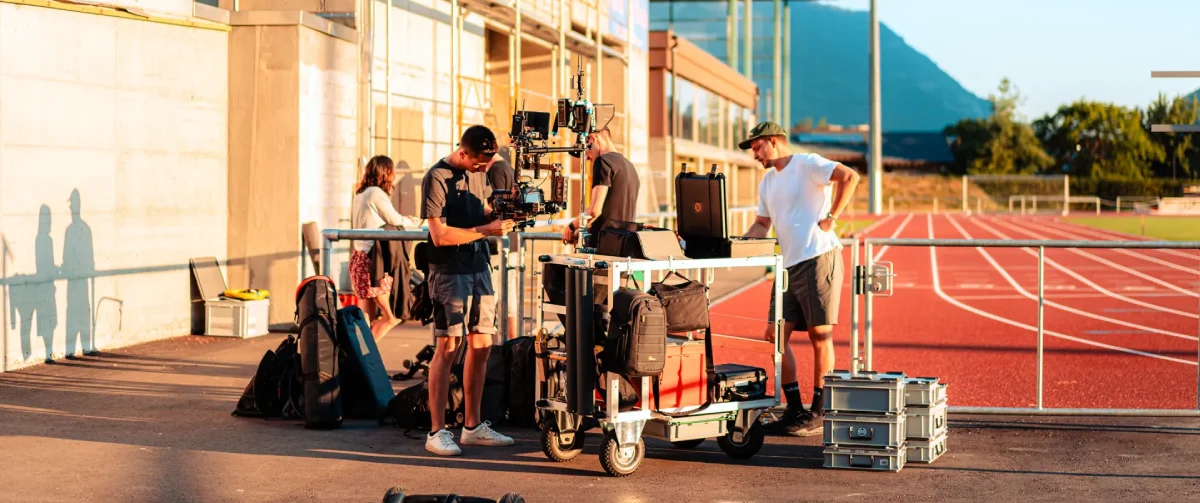
A shoot day starts with a call sheet that lists every cast and crew member, the location, the schedule, the weather forecast, and the shot list. The 1st Assistant Director (1st AD) runs the floor: announces setups, manages timing, calls action and cut to the camera and sound departments. The director works with cast and DoP on performance and image. The DoP coordinates the camera crew and the gaffer’s electricians for lighting. The art department handles set, props, and continuity. The sound mixer and boom operator capture dialogue. Wardrobe and hair and makeup stand by between takes. The line producer manages logistics. The agency producer and creative team watch the monitor. The brand client is often present in the Swiss market, more so than in larger production cultures.
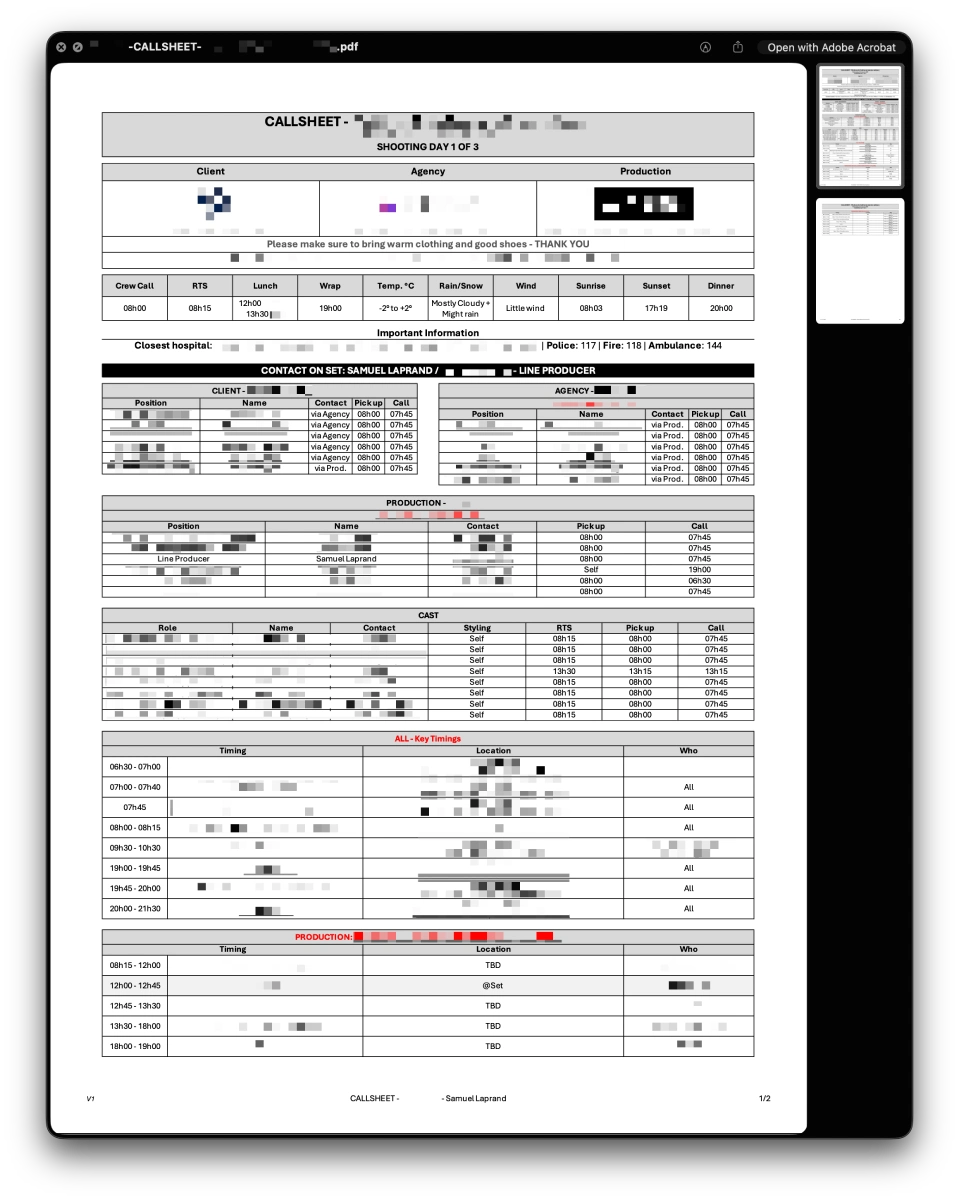
Swiss labour law applies. A standard shoot day is 9 hours of work, not counting breaks, with a hard ceiling of 14 hours including breaks and overtime. Hours 10 and 11 are billed at 125%, hours 12 and 13 at 150%, hour 14 and above at 200% or more. Night work between 23:00 and 06:00 adds another 25% on top. These rules come from SSFV conventions (the Swiss Union Film and Video) and exist to protect crew from unsustainable working conditions. They also mean a tightly planned 9-hour day and a stretched 13-hour day do not cost the same, even with the same crew. A line-by-line breakdown of how overtime actually shows up on a Swiss commercial invoice sits in our guide on how much a commercial film costs in Switzerland.
Stage 8: Post-production
Post starts the day after the shoot wraps. The offline editor cuts the rough version, then iterates through fine cut, director’s cut, agency cut, and client cut, each gated by a review milestone. When the picture is locked, online conform brings the cut up to broadcast resolution. Colour grading builds the look. Sound design and mix bring the audio to two different specifications depending on where the film will run: R 128 -23 LUFS for European broadcast, WEB -14 LUFS for online platforms. VFX and motion graphics handle anything the camera couldn’t capture. Music is either composed original or licensed, both cleared through SUISA in Switzerland.
Standard post takes 2 to 6 weeks. VFX-heavy or multi-language work runs 6 to 12 weeks. The deliverables list at the end of post is longer than first-time clients usually expect: master broadcast versions per language, platform-specific cuts (16:9 for broadcast, 1:1 and 9:16 for social, 6, 15, 30, 60-second versions), and web banners. A single national Swiss campaign can produce more than 100 final files from one shoot.

Stage 9: Delivery and trafficking
The final files leave the post house and reach the broadcasters and platforms. In Switzerland, the broadcast trafficking layer is handled by vendors like Adstream, Extreme Reach, and Peach. Master files go in at broadcast specification, typically ProRes 422 HQ. Trafficking instructions tell the sales houses (Admeira, Goldbach, Ringier Advertising, CH Media Vermarktung) when, where, what version, and at what frequency. Delivery and trafficking take 3 to 10 working days from final approval to first air date.
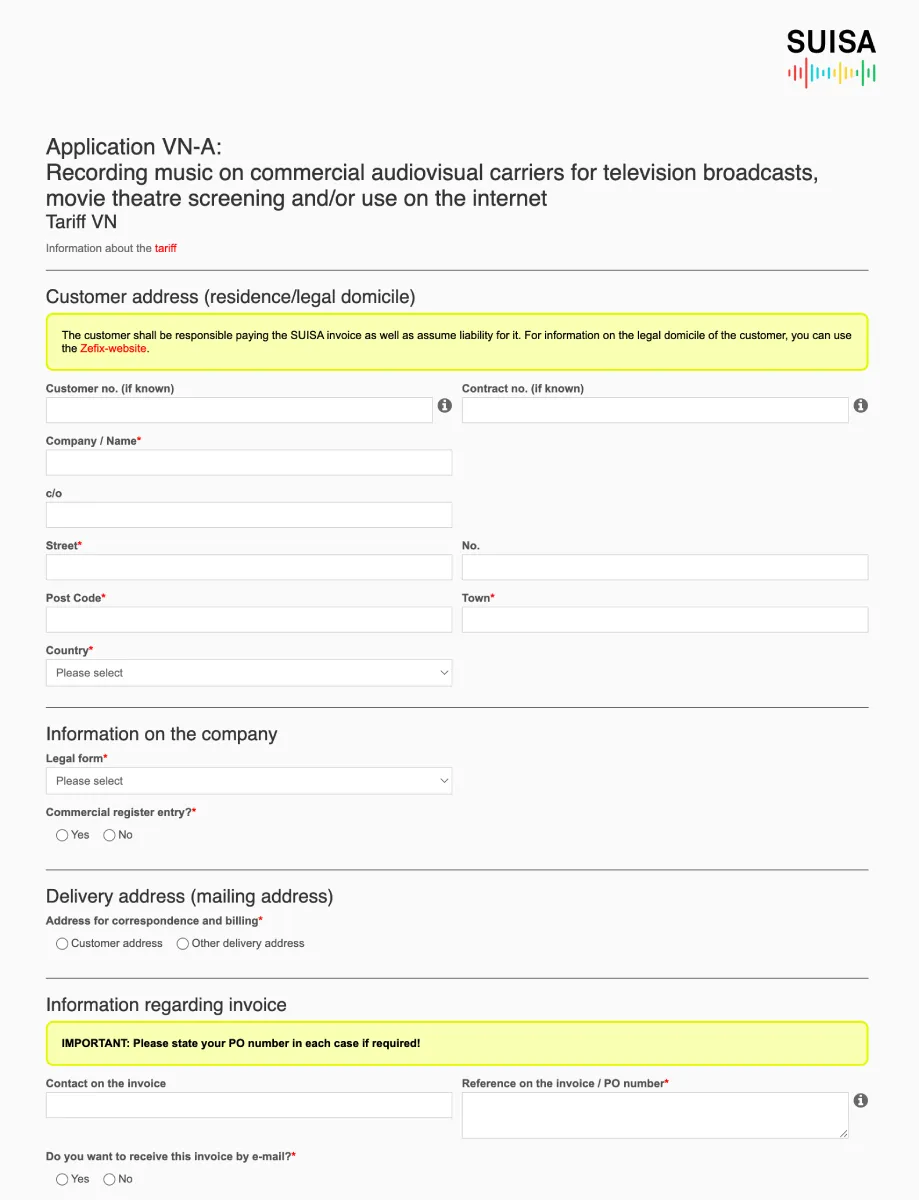
The mandatory step at this stage is SUISA registration. Any commercial containing music intended for distribution in Switzerland or Liechtenstein must be cleared under Tariff VN. Even a commercial without music needs to be registered to receive a SUISA number. Without it, broadcast traffic is blocked.
Stage 10: Invoicing, rights, and amortisation
The production company invoices in three tranches: typically 50% on award, 25% prior to shoot day 1, 25% on delivery. Agency fees follow the scope of work. SUISA, Swissperform, and Suissimage bill around three months later for music, performance, and audiovisual rights.

Talent buyouts come due according to the agreed term, territory, and media. A typical Swiss buyout runs 12 months for national all-media, with renewal options. European rights cost more. Worldwide rights cost more again. Music buyouts follow the same logic. If a campaign planned for one year extends into a second year, or a national campaign goes international, the talent and music rights get renegotiated accordingly.
The brand owns the final master once the production invoice is paid, and owns the right to use it within the scope agreed in the contract (channels, territory, duration). Underlying components (music, talent, footage) remain licensed under their respective terms. Raw footage handover is rare unless explicitly negotiated. VAT applies at 8.1% on all production and agency services to Swiss VAT-registered clients.
How long does the whole thing take
From concept to first air, most commercial film productions in Switzerland take around 12 weeks. That covers treatment delivery, pre-production, a shoot of one to four days, edit, colour grading, online conform, voiceover recording, sound mix, and final delivery. Even productions with VFX cleanup, custom music, multi-language masters, and multiple treatment cycles typically land inside this window.
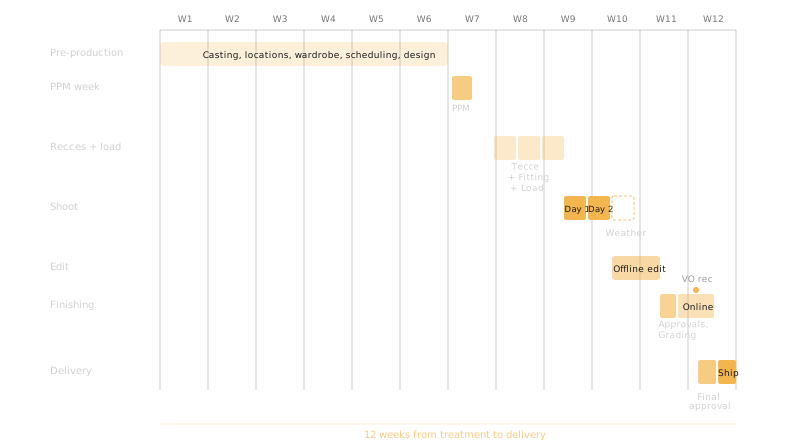
The range varies at both ends. Tactical or performance-driven work can compress to 4 to 6 weeks with a single-bid award and one shoot day. Campaigns with multi-country shoots, named talent carrying long buyout negotiations, or heavily engineered post-production can stretch to 16 weeks or more. Public-sector tenders add 6 to 12 weeks at the front before an agency or production company can even be engaged.
The two pitch processes that decide who makes the film
Two distinct competitive processes sit inside the workflow above, and confusion between them creates friction at every level.
The agency pitch picks the strategic and creative partner. Brand procurement issues an RFI, shortlists agencies, runs chemistry meetings, sends an RFP, hosts a final pitch, and selects a winner. The deliverable is a strategic platform plus a creative response to a written brief. Pitch fees in Switzerland are modest (CHF 5’000 to CHF 25’000 for shortlisted non-winners) and rarely cover the real cost of the work.
The production triple bid picks the company that will physically produce the film. Two or three production companies receive the same brief and the same script. Each writes a director’s treatment and a line-itemised budget. The agency producer drives the process. Running three bids in parallel lets the agency calibrate the budget (how much should this actually cost), the approach (which director has the right instincts for this script), and the level of risk (which team is making realistic promises about what they can deliver on the day).
Two tensions are worth knowing about. The first is what happens when a large agency bids its own in-house production unit against independents. The agency is effectively judging its own work, which can tilt the decision before the treatments are even read. UK practice (the APA and the Institute of Practitioners in Advertising) requires the agency to disclose when an in-house unit is bidding, so the client knows. Switzerland has no formal rule on this.
The second tension is the treatment arms-race. Production companies compete harder and harder on the visual design of the treatment itself: illustrators, designers, animated references, mood films. A treatment that used to be 20 pages is now 40 or 60, and the cost of producing it (which the prodco pays out of pocket, whether they win or lose) has climbed with it. The 2024 UK Production Pitch Process Initiative, jointly published by UK advertisers (ISBA), agencies (IPA), and production companies (APA), explicitly addresses this by asking clients and agencies to run realistic briefs with sustainable workloads.
Public procurement: the simap.ch layer
Any commission from a Swiss federal entity, cantonal department, or state-owned firm (SBB, Swiss Post, Swisscom, Skyguide, SRG SSR) above defined thresholds must be tendered on simap.ch. This is the single biggest structural difference between commercial film production in Switzerland and most other Western European markets.
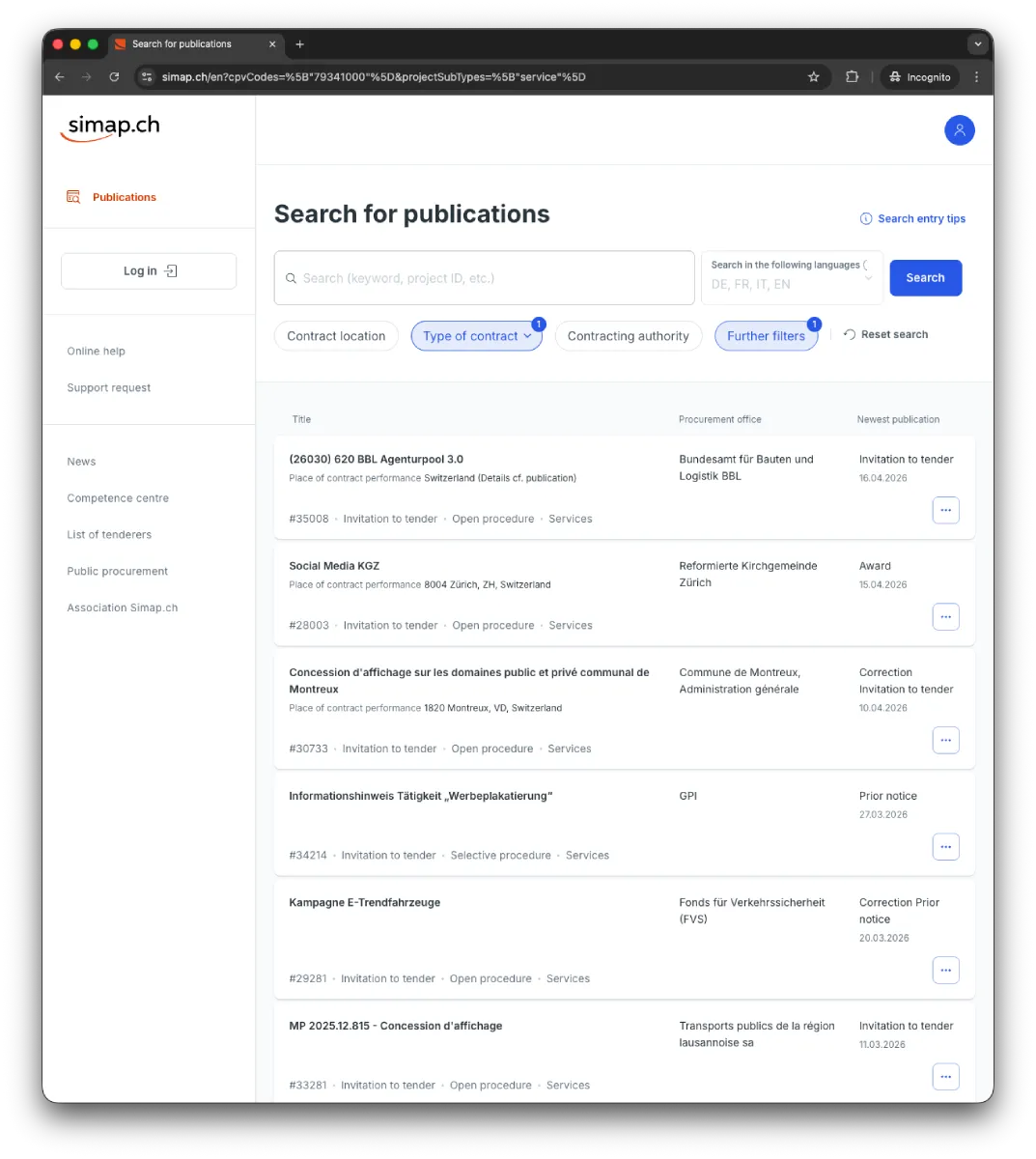
Here is how it works in practice. The contract value decides the procedure.
- Below CHF 150’000: the public buyer can pick a single supplier directly, without a competitive process.
- Between CHF 150’000 and CHF 250’000: the buyer must invite at least three suppliers to bid.
- Above CHF 250’000: the tender has to be published openly on simap.ch, and any qualified Swiss or Liechtenstein company can submit a bid.
There is one additional layer on top. Above a higher threshold, the tender has to follow international trade rules set by the World Trade Organisation (WTO), specifically the Government Procurement Agreement. This threshold is CHF 230’000 for federal service contracts and CHF 350’000 for cantonal service contracts. Above it, the tender must be open to bidders from other WTO member states, not just Swiss and Liechtenstein companies. In practice, that means longer bid windows, publication in multiple languages, and cross-border visibility.

The platform itself was renewed in July 2024, with online bid submission mandatory since February 2025. Tenders are classified by standardised codes (79341000 series for advertising, 92111210 for advertising film production).
What changes for a bidder is how the decision gets made. A private-sector pitch can be decided on chemistry, reputation, and reel. A public-sector tender has to score every bid against criteria published in the tender document, usually weighted by percentage. A typical Swiss communication tender might score price at 40%, quality of the creative concept and references at 30%, quality of the proposed team at 20%, and sustainability or local presence at 10%. A bid that costs less but scores poorly on creative can still lose to a more expensive bid that scores well across the board. The revised inter-cantonal agreement on public procurement (IVöB) explicitly pushes buyers away from pure-price awards toward this kind of weighted scoring.
Two recent Swiss tenders illustrate the scale. In July 2024, SBB published seven creative-service lots covering 2025 to 2030, against an annual advertising spend of around CHF 48 million. In 2020, Swiss Post ran a pool tender of around CHF 20 million covering four creative lots and three media lots, with about 26 agencies awarded across the pools. These are the largest single sources of formalised agency and production work in Switzerland.
For first-time clients in the private sector, the simap.ch layer doesn’t apply. For anyone working on or commissioning public-sector work, it’s the framework that defines everything else.
How Switzerland compares to other markets
The ten stages above run on every commercial film production in the world. What changes from market to market is the regulatory layer and the absolute budget level.
In the UK, the production industry is organised around the Advertising Producers Association, which negotiates standard contracts with the agency association and runs the APA Show each year. British directors represent the global craft top tier.
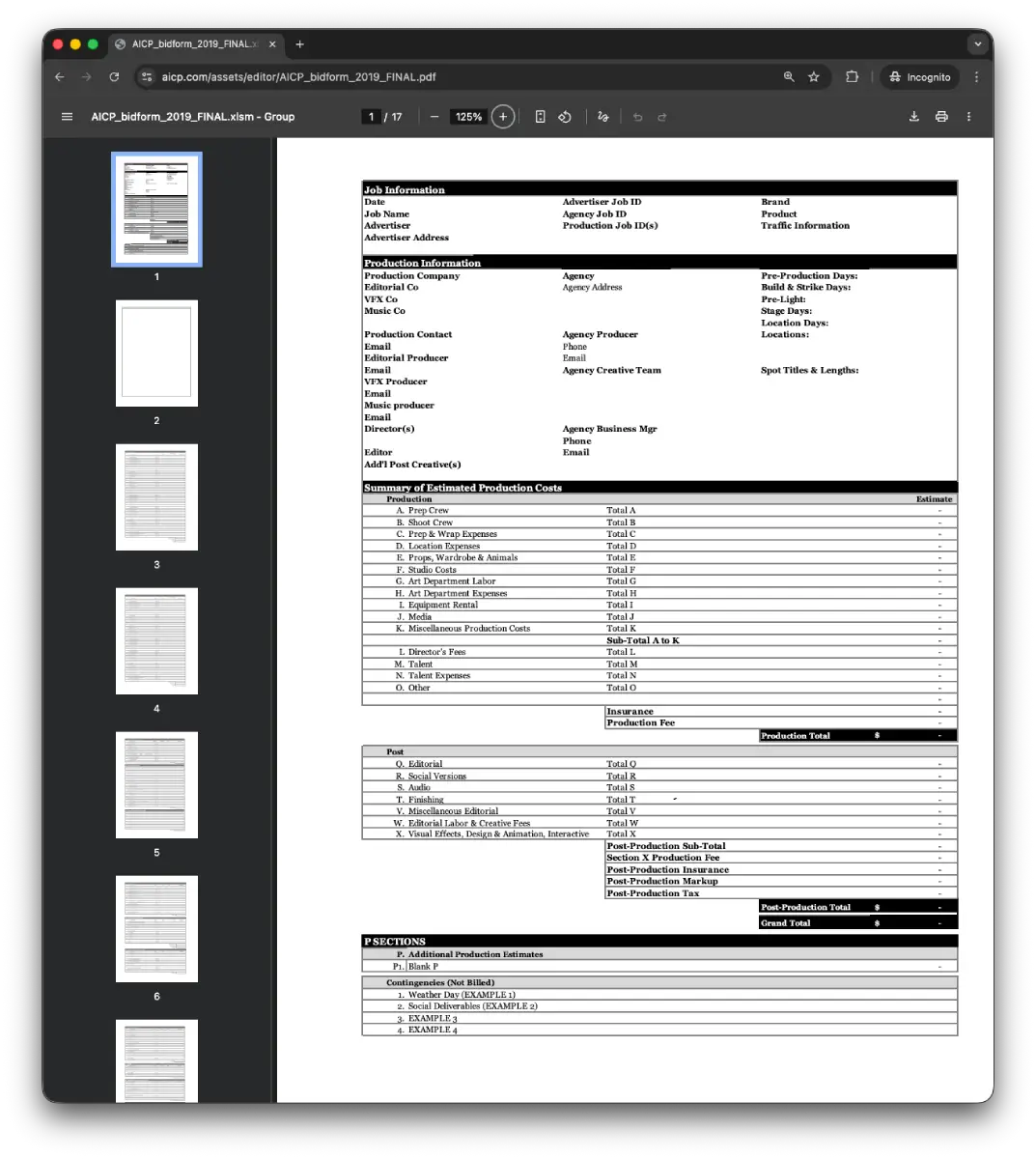
In the US, the Association of Independent Commercial Producers publishes the AICP Bid Form, a detailed line-item budget template introduced in 1975 and last revised in December 2019. American productions also carry a layer of union compliance (for talent, directors, crew, and transport) that runs deeper than anything in Switzerland.
In Germany, the industry association Produzentenallianz plays the same role as the UK and US bodies. The German Pitch Standard 2.0, published in 2024, addresses transparency and fair pay in pitch processes.
In France, production runs through a strong network of director-led production houses like Iconoclast, Wanda, and Bandits.
Two structural differences set Switzerland apart. First, the public-procurement regime is heavier: it applies across federation, cantons, and state enterprises through one national platform (simap.ch), which makes Switzerland the most procurement-formalised major Western European market for state advertising. Second, the union layer works differently.
The SSFV publishes weekly and daily rate lists that most Swiss productions reference as the industry baseline. What it doesn’t have is the legal enforcement attached to American unions like SAG-AFTRA for talent or the Directors Guild of America (DGA), which set binding minimum rates and compliance obligations on every signatory production. SSFV conventions work through industry consensus; US union contracts work through contract law. Swiss budgets typically run 20 to 40% lower than equivalent German jobs and 40 to 60% lower than equivalent UK or US jobs for similar craft level, partly offset by a higher domestic cost base.
Glossary of the terms you’ll hear most often
Brief: the document that defines the marketing problem and the parameters around it.
Treatment: the director’s written and visual interpretation of the script. The creative contract for the film.
Pre-PPM: the internal alignment meeting between agency, production company, and director, held the day before the client-facing Pre-Production Meeting.
PPM (Pre-Production Meeting): the formal sign-off meeting with the client, held 2 to 7 days before the shoot. Decisions taken at PPM are binding.
Call sheet: the daily schedule for cast and crew, issued the evening before each shoot day.
Triple bid: the competitive process where two or three production companies bid for the same job with treatments and budgets.
Production fee: the production company’s overhead and margin, typically 15 to 25% of direct costs.
Director fee: the director’s creative compensation, typically 7 to 10% of production budget for jobs below around CHF 680’000.
Buyout: the lump-sum payment for the right to use talent or music in defined media, territory, and term.
Master: the final broadcast file delivered to traffic.
SUISA: the Swiss collecting society for music authors. Mandatory registration for any commercial broadcast in Switzerland or Liechtenstein.
simap.ch: the mandatory Swiss public-procurement publication platform.
Frequently asked questions
How long does it take to produce a commercial film from start to finish?
Most commercial productions in Switzerland take around 12 weeks from concept to first air. That covers treatment delivery, pre-production, a shoot of one to four days, edit, colour grading, online conform, voiceover recording, sound mix, and final delivery. VFX cleanup, custom music, multi-language masters, and treatment cycles generally fit inside this window. Tactical or performance-driven work can compress to 4 to 6 weeks. Multi-country shoots, named talent with long buyout negotiations, or heavy VFX can stretch to 16 weeks or more. Public-sector tenders add 6 to 12 weeks at the front before an agency or production company can be engaged.
What are the essential stages of a film production?
Ten stages run on every commercial production regardless of budget: internal brief, agency selection, creative development, production company sourcing, treatment and bidding, pre-production, the shoot itself, post-production, delivery and trafficking, and invoicing with rights clearance. Each stage has its own deliverables, key actors, and pitfalls. The sequence does not change between a CHF 8’000 social video and a CHF 600’000 national TV campaign. What changes is the duration of each stage and the size of the team involved.
What happens during a typical shoot day?
A shoot day starts with a call sheet listing every cast and crew member, the location, the schedule, and the shot list. The 1st Assistant Director runs the floor and manages timing. The director works with cast and Director of Photography on performance and image. The camera crew and electricians handle image and light. The art department handles set, props, and continuity. The sound team captures dialogue. Wardrobe and hair and makeup stand by between takes. The line producer manages logistics. Agency creatives and the brand client watch the monitor. Swiss convention caps a standard shoot day at 9 hours of work plus breaks, with overtime at 125% for hours 10 and 11, 150% for hours 12 and 13, and 200% or more beyond that.
What does a film production company actually do that an agency doesn’t?
The agency owns the strategy, concept, script, and storyboard. The production company physically makes the film: hires the director, runs casting and location scouting, contracts the crew, manages the shoot, supervises post-production, clears music and rights, and delivers the master. The two are separate companies with separate contracts, and confusion between them is the most common briefing-stage error for first-time clients.
How does corporate video production differ from a commercial film production?
Corporate video production focuses on information delivered to a known audience through owned channels. Crews are smaller (2 to 5 people), shoots fit inside one or two days, and budgets in Switzerland run CHF 5’000 to CHF 25’000. A commercial film production builds around a story for a paid audience, with a director, Director of Photography, art department, cast, and a crew of 10 to 30 or more, with budgets running CHF 40’000 to CHF 500’000 and beyond. The ten stages are the same. The scope at each stage is what differs. A fuller breakdown sits in our guide on commercial versus institutional film versus branded content.
Further reading
This article sits inside a series on how commercial film production works in Switzerland. For a line-by-line look at what a Swiss commercial actually costs, with real figures from a CHF 90’000 shoot, see how much a commercial film costs in Switzerland. For a framework to evaluate production companies before signing, see how to choose a film production company in Switzerland. For the format question that comes before the production process, see commercial vs. institutional film vs. branded content.
If you’re commissioning your first commercial and want to walk through the ten stages applied to your specific brief,
book a call
Discuss your project with Samuel
or email samuel@focusline.ch.
Focusline Production is a narrative commercial film company based in Valais, Switzerland. We produce narrative commercials and branded content for brands that want their advertising to hold attention. See our recent work or learn more about our production services.