Voici ce que coûte la production d’un film publicitaire en Suisse en 2026, chiffré à partir d’un tournage à CHF 90’000.− qu’on a réalisé, et des tarifs officiels du SSFV (Syndicat Suisse Film et Vidéo).
Dans cet article
- En bref : les budgets films publicitaires en Suisse en 2026
- Pourquoi la production publicitaire suisse coûte ce qu’elle coûte
- Ce qu’il y a derrière le budget : une lecture ligne par ligne
- Casting et buyouts : le poste qui peut surprendre à la facture finale
- Heures supplémentaires, tournages de nuit, et comment la facture grimpe
- Film publicitaire narratif vs vidéo corporate : où va vraiment l’argent
- Comment tirer le meilleur de votre budget film publicitaire
- Questions fréquentes
- Parlons de votre projet
En bref : les budgets films publicitaires en Suisse en 2026
Pour un film publicitaire produit en Suisse, les budgets en 2026 se répartissent en quatre paliers :
| Palier | Fourchette | Ce que ça permet |
|---|---|---|
| Léger | CHF 2’000.− à 20’000.− | Portraits, témoignages, interviews, contenus réseaux sociaux |
| Intermédiaire | CHF 20’000.− à 60’000.− | Film narratif court, contenu de marque, 1 jour de tournage |
| National | CHF 60’000.− à 200’000.− | Film publicitaire narratif avec casting, plusieurs lieux de tournage, 2 à 4 jours de tournage |
| Premium | CHF 200’000.− et plus | Campagnes haut de gamme avec acteurs connus, tournage sur plusieurs jours |
Ces montants concernent la production du film. La diffusion à la télévision, au cinéma ou en publicité en ligne se calcule séparément et dépasse souvent le budget de production.
En Suisse, le budget d’une publicité narrative démarre autour de CHF 20’000.−. En dessous, on peut toujours produire des contenus vidéo de qualité, mais il s’agit plutôt de portraits, de témoignages ou de vidéos corporate centrées sur des interviews.
Pourquoi la production publicitaire suisse coûte ce qu’elle coûte
L’industrie du film en Suisse est régulée et syndiquée. Les tarifs de l’équipe technique sont fixés par le syndicat, et comprendre ce cadre permet de comprendre les prix.
Le cadre SSFV : la grille tarifaire des équipes techniques
Le Syndicat Suisse Film et Vidéo (SSFV) publie des tarifs journaliers et hebdomadaires recommandés pour chaque poste sur un plateau. Producteurs, institutions financières et équipes techniques s’y réfèrent quand il s’agit d’établir un budget.
Les tarifs hebdomadaires correspondent à une semaine de 50 heures en plateau et de 40 heures en postproduction. Ils sont structurés en trois niveaux d’expérience, basés sur les années passées dans le poste. Une année d’expérience professionnelle correspond à au moins 100 jours de travail par année civile.
Niveau 1 : 1 à 3 ans dans le poste
Niveau 2 : 4 à 6 ans
Niveau 3 : 7 ans et plus
Quelques repères pour les tarifs hebdomadaires bruts 2025, en CHF. L’indemnité de vacances de 8,33 % s’ajoute par-dessus :
| Poste | Niveau 1 | Niveau 2 | Niveau 3 |
|---|---|---|---|
| Chef opérateur (fiction) | 3’665.− | 4’195.− | 4’765.− |
| Chef électricien, chef machiniste, ingénieur du son, chef costumier | 1’875.− | 2’145.− | 2’440.− |
| Scripte, 1er assistant caméra, chef décorateur | 1’685.− | 1’925.− | 2’190.− |
| Cadreur, 2e assistant réalisateur, perchman, accessoiriste | 1’620.− | 1’850.− | 2’100.− |
| Best boy, maquilleur, DIT | 1’515.− | 1’735.− | 1’970.− |
| Électricien, 2e assistant caméra, ensemblier | 1’435.− | 1’640.− | 1’865.− |
| Assistant de production, chauffeur | 1’260.− | 1’440.− | 1’635.− |
| Runner, assistant plateau | 1’000.− | 1’100.− | 1’200.− |
Tous les tarifs en CHF, bruts, pour une semaine de 50 heures. Source : grille hebdomadaire SSFV 2025.
Les films publicitaires en Suisse sont budgétés sur des tarifs journaliers plutôt qu’hebdomadaires, le format étant plus court. Le SSFV et l’Association Swissfilm n’ont pas trouvé d’accord sur un cadre tarifaire dédié à la publicité, et le SSFV recommande la grille journalière de 2009 comme référence. En pratique, on s’appuie à la fois sur cette grille et sur les tarifs hebdomadaires 2025 divisés par cinq quand on établit un budget.
Semaines de 50 heures, journées de 9 heures, et ce qui compte comme temps de travail
Quelques règles qui affectent directement un budget de film publicitaire suisse :
La semaine contractuelle est de 50 heures sur 5 jours, soit 10 heures par jour, pauses comprises.
Une journée de tournage standard représente 9 heures de travail. Au-delà, on entre dans le calcul des heures supplémentaires, détaillé plus bas.
Une journée de tournage ne peut pas dépasser 14 heures, pauses et heures supplémentaires comprises.
Le travail de nuit, entre 23 h et 6 h, plafonne la journée à 9 heures plus les pauses.
Le temps de repos entre deux journées de tournage est en moyenne de 11 heures, et ne peut pas descendre en dessous de 9.
Le temps de trajet supérieur à 30 minutes par trajet, ainsi que le transport d’équipement ou de personnel dans des véhicules de production, compte comme temps de travail.
Les pauses repas de moins de 30 minutes comptent aussi comme temps de travail.
Ces règles protègent les équipes de conditions de travail excessives. Une équipe qui travaille 16 heures ne coûte pas le même prix qu’une équipe qui travaille 9 heures, et le calcul des heures supplémentaires détaillé plus bas fait grimper la facture rapidement.
Ce qu’il y a derrière le budget : une lecture ligne par ligne
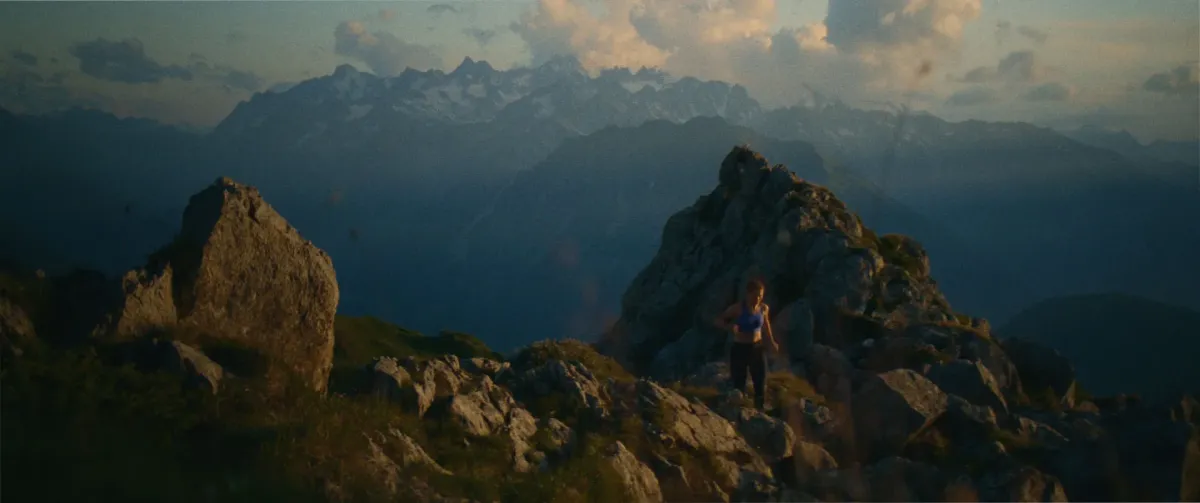
En 2024, on a produit Born to run, un film publicitaire narratif spéculatif (spec ad) pour On Running. Deux jours de tournage, cinq acteurs, plus de dix figurants, plusieurs lieux en Valais.
Le budget total calculé était de CHF 90’271.−. Voici comment il se répartissait :
| Poste budgétaire | Montant (CHF) | Part |
|---|---|---|
| 01 Préproduction | 8’068.− | 9 % |
| 02 Production (réalisateur, équipe, équipement, décor) | 36’468.− | 40 % |
| 03 Postproduction | 26’457.− | 29 % |
| 04 Transports, restauration, divers | 2’250.− | 3 % |
| 05 Casting, figurants | 4’200.− | 5 % |
| Sous-total | 77’444.− | 86 % |
| Frais de gestion et de production | 12’827.− | 14 % |
| Total | 90’271.− | 100 % |
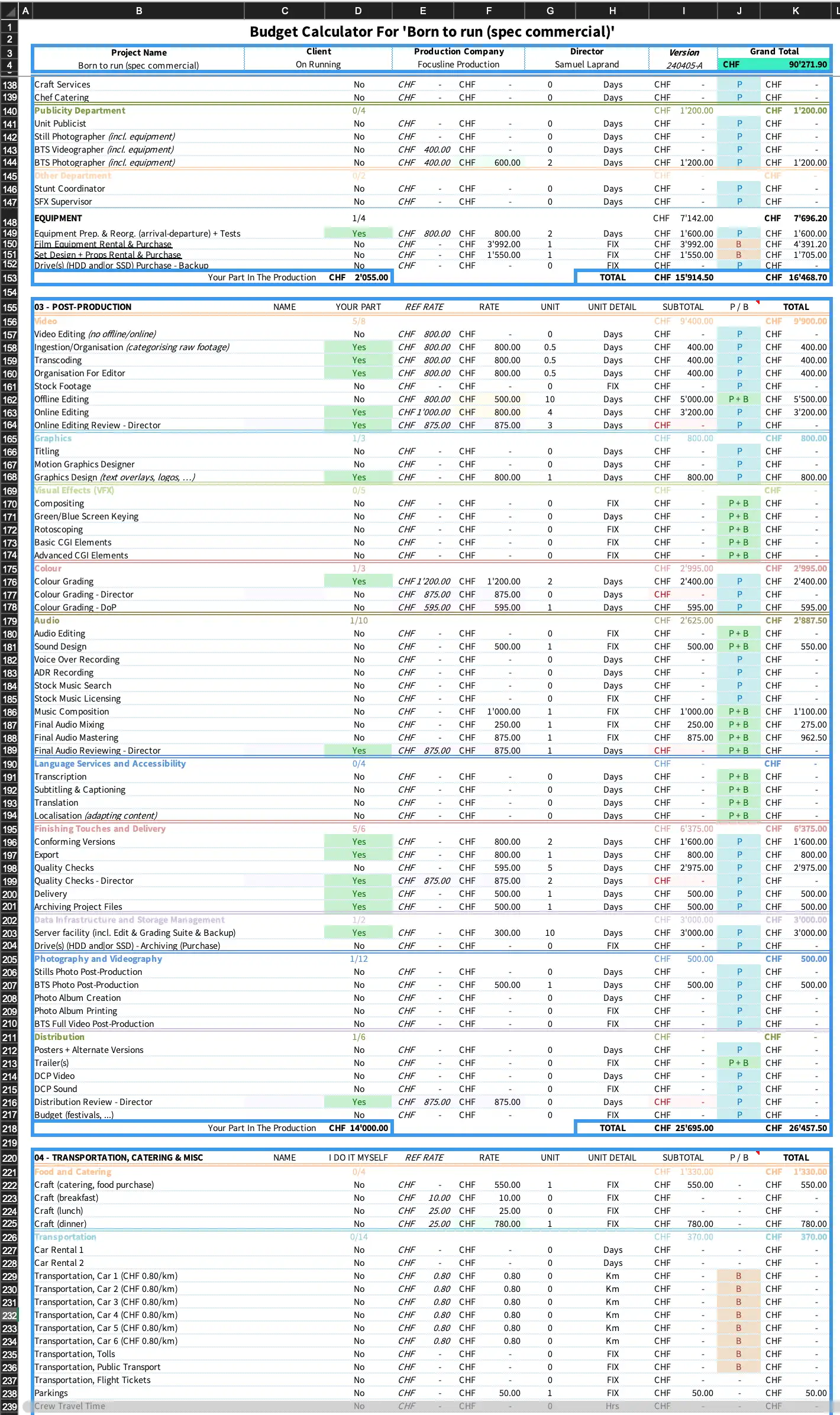
Born to run a été réalisé comme projet spéculatif (spec ad). « Spec ad » ne veut pas dire gratuit. Ça veut dire que chaque personne engagée sur le projet a donné son temps sans facturer, pour que le film puisse exister. Si la même production avait été payée au tarif du marché, le client aurait payé CHF 90’271.−. Nous avons chiffré le projet à ce montant en appliquant les tarifs SSFV sur toute l’équipe et toute la durée du projet.
Voici ce que chacune de ces lignes comprend.
Préproduction (9 % sur Born to run, en général 10 à 15 %)
La préproduction, c’est tout ce qui se passe avant le premier jour de tournage. Sur Born to run, ce poste couvrait le développement du concept, l’écriture, le storyboard, l’élaboration du budget, la planification, le PPM, les réunions de préproduction, le repérage des lieux en Valais, le casting des personnages principaux (les trois Lena : enfant, adolescente, adulte), la préparation de la direction artistique et des décors, la préparation des costumes, les essais coiffure et maquillage, les répétitions avec le casting, les plans de tournage, les moodboards, les contrats et les autorisations.
Sauter l’une de ces étapes coûte généralement plus cher que de la faire. Une journée de tournage qui commence sans plan de tournage finalisé, sans répétitions, ou sans décor prêt, est une journée qui déborde, et qui fait grimper la facture des heures supplémentaires.
Production : réalisateur, équipe et équipement
Sur Born to run, la partie production s’élevait à CHF 36’468.−. Dans ce montant, la rémunération du réalisateur représentait environ CHF 20’000.−. Cette rémunération couvre l’ensemble du projet de A à Z : développement du concept, écriture, casting, réalisation des deux jours de tournage, supervision de la postproduction, étalonnage, livraison finale. Il s’agit d’un forfait pour la direction créative du projet, pas d’un tarif journalier pour être présent en plateau.
Les CHF 16’000.− restants couvraient le reste de l’équipe : chef opérateur, 1er assistant réalisateur, 1er assistant caméra, chef électricien, chef décorateur, directeur artistique, image consultant, assistants de production, perchman, photographe de plateau, plus de 15 postes en plateau sur les deux jours.
Si on reprend cette équipe et qu’on applique les tarifs hebdomadaires SSFV, on retombe sur nos pieds. Un chef opérateur niveau 1 est à CHF 3’665.− la semaine. Pour deux jours, ça fait environ CHF 1’466.− de tarif de base, plus l’indemnité de vacances, plus les charges sociales d’environ 12,5 %. Multipliez par 10 à 15 postes et vous arrivez à CHF 25’000.− à 40’000.− uniquement pour l’équipe, avant même de toucher à une caméra.
Location d’équipement
Voici à quoi ressemble un pack caméra et lumière pour une journée de tournage d’un film publicitaire narratif. Les prix de référence viennent de loueurs suisses comme Eberle Filmequipment, Blow Up Rental et Visuals :
| Équipement | Tarif journalier (CHF) |
|---|---|
| Arri Alexa Mini LF, corps, 4 batteries, 2 To de média | 1’900.− |
| Série d’optiques fixes, 5 focales (Zeiss Supreme ou Cooke S4/i) | 400.− à 700.− |
| Système de point sans fil, Teradek RT / Preston | 150.− à 250.− |
| Transmission vidéo sans fil, Teradek Bolt + 2 moniteurs | 150.− à 250.− |
| Dolly avec rails | 300.− à 450.− |
| Arri M40 HMI | 250.− |
| Arri M18 HMI | 150.− |
| Arri Skypanel S60-C, LED | 240.− |
| Aputure Nova P600C, panneau LED | 180.− |
| Pack machinerie : pieds, drapeaux, diffusion, gueuses (sacs de sable) | 250.− à 400.− |
| Tarif journalier indicatif du pack complet | ~4’000.− à 4’800.− |
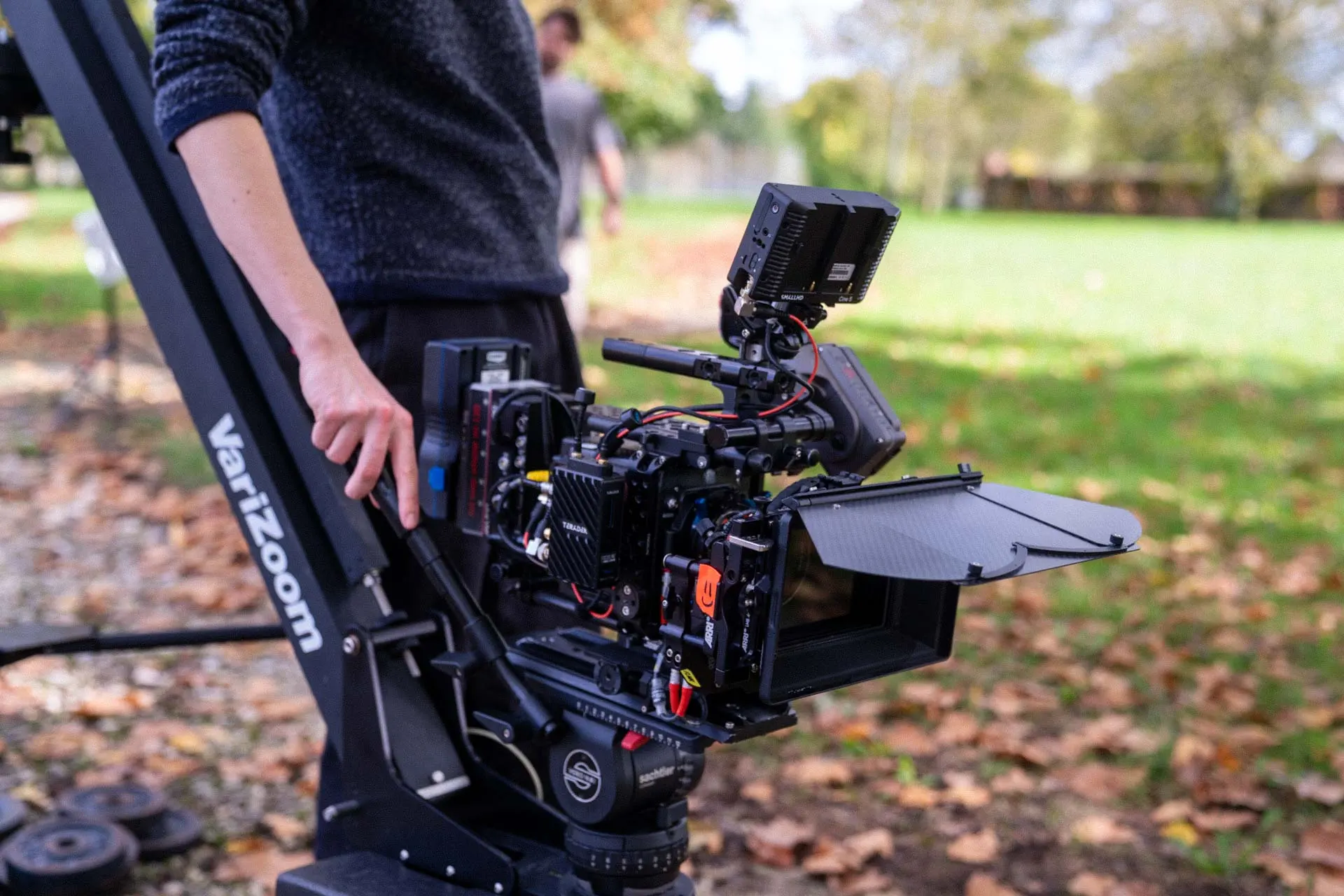
Des remises multi-jours s’appliquent généralement : 3 jours facturés à environ 2,5 × le tarif journalier, 5 jours à environ 3,5 ×.
Sur Born to run, la ligne équipement s’est élevée à CHF 3’992.− sur deux jours. On a tourné avec le matériel qu’on possède chez Focusline. Sur un tournage payé, on aurait loué quelques équipements supplémentaires : optiques spécifiques, un vrai système de dolly, plus de lumière. Ça aurait fait grimper la ligne équipement et rapproché du tarif indicatif ci-dessus.
Lieux, autorisations et le coût caché d’un tournage en Suisse
Les lieux publics en Suisse demandent presque toujours une autorisation. Les communes appliquent des tarifs qui vont de la gratuité dans les petits villages à plusieurs milliers de francs par jour dans les centres-villes, sur les places principales ou dans les gares. Des villes comme Genève, Zurich et Lausanne disposent de Bureaux d’accueil de tournage, avec des tarifs transparents.
À côté de la taxe de tournage, il faut aussi budgéter les journées de repérage, les honoraires du régisseur général, la sécurité si l’espace public est concerné, la régulation du trafic si une route est bloquée, ainsi que les assurances que la commune demande avant d’accorder l’autorisation.
Postproduction (15 à 25 % de la plupart des budgets, 29 % sur Born to run)
Montage, étalonnage, sound design, musique, effets visuels (VFX), déclinaisons, livraison. Sur Born to run, la postproduction représentait CHF 26’457.− du total. Ça couvrait le montage offline, l’online, l’étalonnage, la composition musicale, le sound design, le mixage, les déclinaisons et la livraison.
Une composition musicale originale sur un film publicitaire narratif peut aller de CHF 3’000.− à 15’000.− selon qu’il s’agit d’un compositeur solo ou d’un arrangement plus ambitieux avec plusieurs instruments enregistrés. Une licence depuis une banque de musique coûte entre CHF 200.− et 1’500.− selon le morceau, le territoire et la durée.
Frais de production et de gestion : ce que fait le producteur
Les frais de gestion et de production sur Born to run représentaient CHF 12’827.−, soit environ 14 % du total. C’est ce que le producteur apporte au projet au-delà de l’équipe technique : le réseau qui permet de réunir les bonnes personnes sur un tournage, la capacité de construire un budget qui correspond à la réalité du terrain, le temps passé à négocier les contrats, à gérer les charges sociales et les salaires, à organiser les assurances, et à absorber le risque financier si le tournage déborde.
En Suisse, les frais de production se situent généralement entre 12 et 20 % du budget « below-the-line » (les coûts directs de production, hors honoraires agence et rémunérations artistiques principales).
Casting et buyouts : le poste qui peut surprendre à la facture finale
C’est le poste où les montants bougent le plus entre le premier devis et la facture finale. Autant l’anticiper dès le départ.
Tarifs journaliers des acteurs suisses
Le SSFV, avec ScèneSuisse, t. Professions du spectacle et le Syndicat Suisse Romand du Spectacle (SSRS), publient trois tarifs journaliers bruts recommandés pour les acteurs professionnels :
Niveau A : CHF 1’650.− bruts, tarif d’entrée pour les acteurs avec une formation d’acteur reconnue ou une expérience équivalente
Niveau B : CHF 1’950.− bruts, pour les acteurs avec 10 à 15 ans d’expérience professionnelle
Niveau C : CHF 2’350.− bruts, pour les acteurs avec plus de 15 ans d’expérience
Ces tarifs s’appliquent à la journée. Il n’y a pas de demi-journée : même pour une présence courte en plateau, c’est une journée pleine qui est facturée. Le cachet couvre la journée de tournage et tout le travail autour : lecture du scénario, essayages costumes, essais coiffure et maquillage, répétitions, une journée de doublage, et pour les rôles plus importants, interviews et presse.
Pour les petits rôles muets et les enfants, les tarifs peuvent être inférieurs. Les silhouettes se situent autour de CHF 250.− par jour, les figurants entre CHF 80.− et 150.−.
Qu’est-ce qu’un buyout
Le cachet journalier paie l’acteur pour sa présence et son interprétation sur le tournage. Il ne paie pas le droit d’utiliser son image et sa voix dans la publicité. Ce droit s’appelle le buyout (rachat des droits).
Le buyout se calcule en pourcentage du cachet journalier de l’acteur, par année de diffusion, par canal de diffusion.
Pourcentages de buyout par média en Suisse, recommandation SSFV
| Média | Buyout (% du cachet journalier, par année) |
|---|---|
| TV nationale | 100 % |
| TV régionale ou locale | 50 à 100 % |
| Cinéma national | 75 % |
| Cinéma régional | 50 à 75 % |
| Publicité en ligne payante, web, display, pre-roll | 100 % |
| Canaux digitaux propres, site de marque, social organique | 50 % |
| Écrans publicitaires, affichage grand format, e-boards | 50 % |
| Affiches | 50 % |
| Annonces presse | 50 % |
| PLV, flyers | 25 à 50 % |
| Packaging | 25 à 100 % |
| BTL | 50 % |
Les buyouts sur différents médias sont cumulatifs. Ils sont payés pour une année de diffusion, dans un pays. Les buyouts sont dus à nouveau si la campagne est prolongée d’une année supplémentaire.
Exemple chiffré
Jeune actrice professionnelle niveau A, un rôle principal dans un film publicitaire suisse. Deux jours de tournage. Campagne diffusée pendant un an en TV nationale, en cinéma et en publicité en ligne payante.
| Poste | Calcul | Montant (CHF) |
|---|---|---|
| 2 jours de tournage au niveau A | 2 × 1’650.− | 3’300.− |
| Buyout TV nationale | 100 % de 1’650.− | 1’650.− |
| Buyout cinéma national | 75 % de 1’650.− | 1’238.− |
| Buyout publicité en ligne payante | 100 % de 1’650.− | 1’650.− |
| Total pour une actrice principale, année 1 | 7’838.− |
Avec un deuxième rôle parlant, quelques figurants et une prolongation sur une deuxième année, la ligne casting peut vite dépasser CHF 15’000.− à 20’000.−. À anticiper au stade du traitement, quand le plan média est encore ouvert.
Heures supplémentaires, tournages de nuit, et comment la facture grimpe
Les budgets publicitaires suisses sont construits sur une journée de tournage de 9 heures. Au-delà, chaque heure supplémentaire est facturée avec une majoration. La grille appliquée sur les films publicitaires suisses est la suivante :
Heures 1 à 9 : tarif de base, 100 %
Heures 10 et 11 : 125 %
Heures 12 et 13 : 150 %
Heures 14 et 15 : 200 %
Heure 16 et au-delà : 250 %
Travail de nuit entre 23 h et 6 h : +25 % en plus, cumulables avec les heures supplémentaires
Exemple chiffré pour un chef électricien niveau 3
Prenons un chef électricien niveau 3, 7+ ans d’expérience. La grille SSFV de 2009 donne un tarif journalier de base de CHF 600.− pour une journée de 9 heures.
Le tarif horaire de base correspond à 1/9 du cachet journalier, soit CHF 67.− de l’heure. On applique la grille des heures supplémentaires à une journée de 13 heures :
| Tranche horaire | Taux | Montant horaire (CHF) | Total de la ligne (CHF) |
|---|---|---|---|
| Journée de base, heures 1 à 9 | 100 % | 67.− | 600.− |
| Heure 10 | 125 % | 84.− | 84.− |
| Heure 11 | 125 % | 84.− | 84.− |
| Heure 12 | 150 % | 100.− | 100.− |
| Heure 13 | 150 % | 100.− | 100.− |
| Total journée de 13 heures | 968.− |
Ça représente CHF 368.− d’heures supplémentaires en plus du cachet de base, soit une majoration de 61 % pour quatre heures supplémentaires. À l’échelle d’une équipe de 10 à 15 postes, une seule journée de 13 heures peut ajouter CHF 4’000.− à 6’000.− à la masse salariale de l’équipe. Si certaines de ces heures tombent entre 23 h et 6 h du matin, ajouter 25 % supplémentaires.

C’est pour ça que la planification est centrale dans un budget de film publicitaire suisse. Une journée de 9 heures et une journée de 13 heures ne coûtent pas la même chose, même avec la même équipe.
Per diems, repas et déplacements
Quand on tourne en dehors de la région de l’équipe, la production prend en charge les repas et l’hébergement de l’équipe. Les per diems couvrent uniquement les repas et les frais courants. Les montants de la profession sont fixés :
Petit-déjeuner : CHF 10.−, s’il n’est pas fourni
Dîner ou souper : CHF 32.− par repas, s’il n’est pas pris en charge
Blanchisserie : CHF 7.50 par jour, à partir du 6e jour d’un tournage hors région
Utilisation d’un véhicule privé sur ordre de production : CHF 0.70 par kilomètre
L’hébergement est une ligne séparée. En Suisse, compter CHF 150.− à 200.− par nuit par personne pour un hôtel intermédiaire proche du lieu de tournage.
Pour une équipe de 15 personnes qui tourne deux jours en Valais, avec dîner pris en charge sur le plateau et souper libre, la ligne per diems se situe entre CHF 1’500.− et 2’500.−. L’hébergement pour une nuit entre les deux jours de tournage représente CHF 2’250.− à 3’000.− de plus.
Film publicitaire narratif vs vidéo corporate : où va vraiment l’argent
Deux films de 60 secondes peuvent avoir la même durée et coûter CHF 20’000.− ou CHF 120’000.−. La différence tient à ce que le film cherche à faire.
Une vidéo corporate (interview d’un dirigeant, présentation produit, vidéo de formation interne) peut se tourner avec une petite équipe, dans un seul lieu, en une journée. On budgète 3 à 5 personnes, une caméra, un pack lumière, et la facture se situe entre CHF 8’000.− et 25’000.−.
Un film publicitaire narratif se rapproche plutôt d’une production de court métrage. Il comporte un scénario, un casting, plusieurs lieux de tournage, un réalisateur, un chef opérateur, un département artistique, une équipe son, un étalonneur, et parfois un compositeur. Le budget reflète la taille de l’équipe et le temps passé sur le projet, pas la durée du montage final.
Born to run coûterait CHF 90’271.− au tarif du marché. Swift Shift, un autre film publicitaire narratif spéculatif (spec ad) qu’on a réalisé pour Alpina Bank, était un tournage d’une seule journée avec un casting plutôt réduit. Au tarif du marché, il se situerait entre CHF 40’000.− et 60’000.−. Les deux sont des films publicitaires narratifs, à des échelles différentes, et aucun ne rentre dans un budget de vidéo corporate.
Comprendre comment les coûts se répartissent par format est un premier point. Le deuxième, c’est de trouver une société de production dont le process et la structure d’équipe correspondent au format du projet. Notre guide pour choisir une société de production en Suisse détaille ce qu’il faut regarder dans un portfolio, les questions à poser avant de signer, et ce qui manque souvent dans un devis peu cher.
Comment tirer le meilleur de votre budget film publicitaire
Quelques principes réduisent régulièrement le coût d’un film publicitaire en Suisse sans affecter le résultat final.
Commencez par la stratégie, pas par le plan de tournage. Faire des modifications au montage coûte plus cher que de prendre le temps en amont. Plus on passe de temps en préparation, moins on en passe en postproduction à essayer de résoudre ce qui aurait dû être réglé au script.
Prévoyez plusieurs livrables à partir d’un seul tournage. Un tournage peut produire le film master, les cutdowns pour les réseaux sociaux, les versions verticales, les versions alternatives, les photos et les making-of. Quand c’est planifié dès la préproduction, le coût de location reste le même. Si ça arrive après la livraison, il faut souvent organiser un re-tournage pour obtenir ce qui manque.
Respectez la grille SSFV. Les productions payées en dessous de la grille SSFV placent les équipes dans une situation où le travail n’est plus viable pour elles. La grille fixe un seuil minimal qui permet au métier de continuer à exister.
Parlez avec votre producteur de ce dont le brief a vraiment besoin. Chaque production est une discussion sur l’ampleur du projet : combien de jours de tournage, quelle taille d’équipe, quel niveau de direction artistique, quels livrables. Un bon producteur aide à mettre en face du brief le niveau d’investissement qui correspond, pour que chaque ligne du budget serve le film.
Pour une vue étape par étape de ce que cette préparation implique, notre guide sur le déroulement d’une production de film publicitaire parcourt les dix étapes, du brief à la livraison.
Questions fréquentes
Quel est le budget pour produire un film publicitaire en Suisse ?
Ça dépend du format. Une vidéo portrait ou une vidéo témoignage peut être produite en Suisse pour CHF 2’000.− à 6’000.− (et plus selon l’ambition). Un film narratif court avec une petite équipe et un jour de tournage démarre autour de CHF 15’000.− à 20’000.−. Un film publicitaire narratif avec casting, plusieurs lieux de tournage et une équipe complète démarre autour de CHF 40’000.− à 60’000.−. En dessous de ces budgets, on peut toujours produire une vidéo de qualité, simplement dans un autre format. La question la plus utile est de savoir quel format correspond à ce que vous cherchez à communiquer.
Si la réponse n’est pas évidente, notre comparatif film publicitaire, film institutionnel et contenu de marque met en face chaque format avec son objectif business, avec des scénarios et des fourchettes de budget pour chacun.
Pourquoi un film publicitaire narratif coûte plus qu’une vidéo corporate ?
Un film publicitaire narratif s’articule autour d’une histoire. Il nécessite un auteur, un réalisateur, un chef opérateur, un département artistique, un casting, et parfois un compositeur. Une vidéo corporate s’articule autour d’une information, qu’une équipe plus réduite peut prendre en charge. L’écart de prix reflète la taille de l’équipe et le temps qu’elle consacre au projet, pas la durée du montage final.
Quels postes représentent la plus grosse part du budget ?
Les honoraires de l’équipe et du réalisateur cumulés représentent typiquement 40 à 50 % d’un budget de film publicitaire en Suisse. La postproduction se situe autour de 20 à 30 %. La location d’équipement représente 5 à 15 %. Le casting et les buyouts peuvent aller de 5 à 25 % selon que la campagne utilise des acteurs professionnels et selon l’étendue de la diffusion.
Les tarifs SSFV s’appliquent-ils aux productions publicitaires ?
Les tarifs hebdomadaires SSFV sont formellement rédigés pour la fiction, le long-métrage, la série et le documentaire. Pour la publicité, le SSFV et l’Association Swissfilm n’ont pas pu s’entendre sur un cadre tarifaire commun. Le SSFV recommande la grille journalière de 2009 comme référence. En pratique, la plupart des producteurs publicitaires suisses s’appuient à la fois sur la grille journalière de 2009 et sur les tarifs hebdomadaires 2025 divisés par cinq.
Combien de temps dure une production de film publicitaire, du brief à la livraison ?
Pour un film publicitaire narratif de taille moyenne, compter 6 à 12 semaines du lancement à la livraison finale. La préproduction dure typiquement 3 à 6 semaines (écriture, casting, repérages, réunions de production). Les tournages durent entre 1 et 4 jours. La postproduction dure 3 à 5 semaines (montage, étalonnage, son, musique, déclinaisons).
Toute production s’inscrit dans le triangle qualité, temps, budget. On peut optimiser deux des trois, pas les trois en même temps. Un film dont la date butoir est courte et dont l’exigence de qualité est élevée coûtera plus cher. Un film bon marché avec une date butoir courte fera des compromis sur la qualité. Un film bon marché et de haute qualité prendra plus de temps à produire. Le bon réflexe : choisir les deux critères qui comptent le plus pour votre brief et discuter ouvertement des compromis avec votre producteur.
Qu’est-ce qu’un buyout, et ne concerne-t-il que les acteurs ?
Un buyout est la somme payée pour le droit d’utiliser un contenu, que ce soit la performance d’un acteur, une vidéo de banque d’images ou une composition musicale, sur un média donné, dans un territoire donné, pour une période donnée, typiquement un an. Ce montant est distinct du cachet de production ou de la licence, qui ne couvrent que la création ou l’acquisition initiale.
Les buyouts s’appliquent surtout aux acteurs professionnels sur les productions publicitaires, mais la même logique existe pour les vidéos de banque d’images sous licence rights-managed : le prix dépend de l’usage, du territoire et de la durée. Les banques d’images royalty-free fonctionnent différemment, une seule somme pour un usage illimité, ce qui en fait souvent le choix le plus simple sur des budgets définis. Les compositions musicales originales ont leurs propres structures de licence et de buyout, en particulier quand le compositeur conserve les droits et passe par un organisme de gestion collective (SUISA en Suisse).
Parlons de votre projet
Si vous avez besoin de budgétiser un film publicitaire suisse et souhaitez discuter de ce dont votre brief a vraiment besoin, réservez un appel
Discutez de votre projet avec Samuel ou écrivez-moi à samuel@focusline.ch. On revient avec vous sur les montants et le raisonnement qui les accompagne.
Focusline Production est une société de production de films publicitaires narratifs basée en Valais, Suisse. On fait des films pour des marques qui veulent que leur publicité ressemble à une histoire qu’on a envie de regarder. Découvrez nos projets récents ou notre approche du film publicitaire narratif.